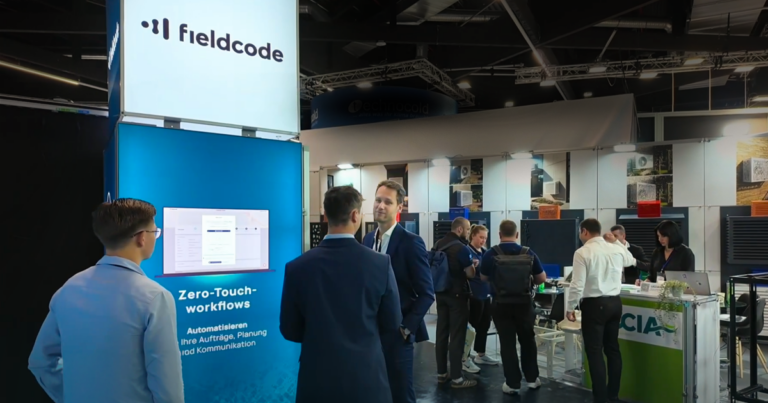
Maintenance Antwerp 2026 highlights and key insights
This article is also available in German
One thing stood out at Maintenance Antwerp 2026. The conversation was not really about adding more systems. It was about making maintenance work easier to control once the day starts moving.
That came through in the sessions around asset management, inspection, troubleshooting, spare parts, Enterprise Asset Management (EAM), drones, AI, and scheduling. The common thread was practical control. Teams were looking for better visibility before work starts, better decisions while work was in progress, and fewer gaps between planning and execution.
Why better asset visibility still matters in maintenance
A lot of the event content came back to a very familiar problem. If the asset picture is weak, everything around the job gets harder. That showed up in sessions on maintenance strategy, technical inspection, and AI-enabled asset management.
This is still where many delays begin. Not with the repair itself, but earlier.
A job is harder to plan when:
- the asset history is incomplete
- the condition is still unclear
- the likely repair path is still a guess
- the technician is sent out without enough context
That is why asset visibility keeps coming up next to execution topics. It is not just about keeping records tidy. It is about giving teams enough clarity to make better decisions before the day starts slipping.
How AI is being used more practically in maintenance
One of the more interesting things at Antwerp was the way AI was discussed. The sessions were tied to specific use cases, like AI-enabled asset management, drones and AI with an ROI angle, and digital coworkers in EAM. That felt more grounded than the broad AI talk that usually surrounds these events.
The useful question now is not whether AI belongs in maintenance. It is where it actually helps.
In practice, that could mean:
- spotting patterns earlier from inspection data
- helping structure information faster
- reducing manual sorting and follow-up
- keeping work moving when teams are overloaded
That shift matters. Maintenance teams do not need more theory layered on top of daily pressure. They need fewer points where work gets stuck between diagnosis, planning, and action.
Why spare parts still make or break maintenance work
Another thing the event made very clear was that preparation still matters just as much as technology. Sessions on pumps, seals, troubleshooting, stock-related topics, and maintenance planning all pointed back to the same issue: a lot of delays still come from work starting without the right materials or without a clear understanding of what the visit will require.
That sounds basic, but it is still one of the biggest reasons work slows down.
A visit can go off track because:
- the wrong part was expected
- the part was not available in time
- the site details were incomplete
- the technician arrived missing key context
This is why spare parts and scheduling should not sit in separate conversations. If the job is not really ready, assigning it faster does not solve much. It just moves the problem forward.
Why scheduling is becoming central to maintenance operations
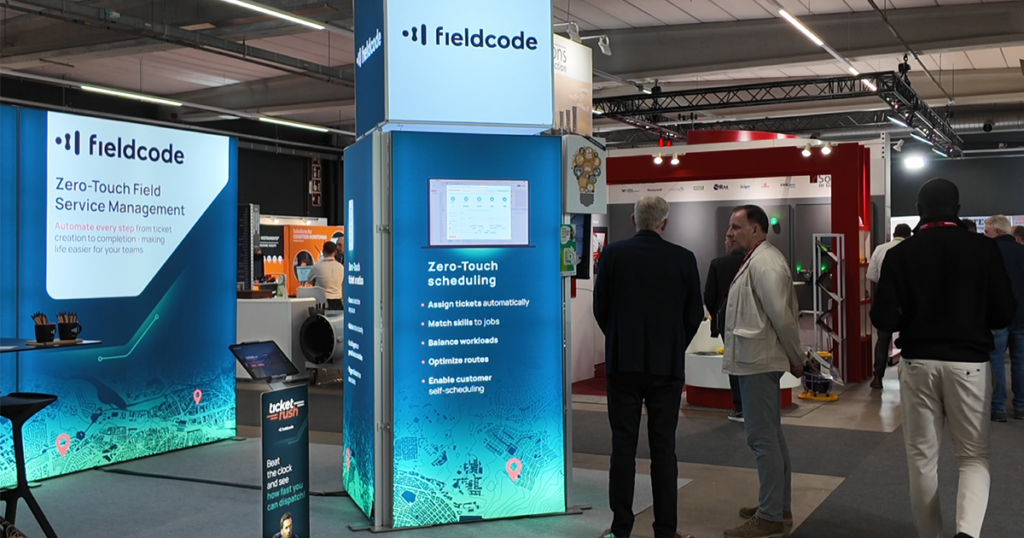
One of the most relevant signals at Antwerp was that scheduling showed up alongside maintenance and asset topics, including the TechTalk on Zero-Touch scheduling with AI agents. That says a lot about how teams are thinking now. Scheduling is no longer just the admin step after the technical decision has been made. It is part of whether the operation stays stable at all.
That is especially true when maintenance work depends on several moving parts at once:
- technician skills
- travel and location
- urgency and SLAs
- customer availability
- parts readiness
- updates that still arrive by phone or email
When all of that is handled manually, teams spend too much time pushing work along instead of actually moving it forward. This is where voice AI agents and Zero-Touch scheduling become more relevant.
In Fieldcode, that means connecting intake, planning, assignment, and updates in one flow, so routine coordination does not keep bouncing back to the team. Instead of treating scheduling as a separate admin task, the goal is to move work forward with the right logic already in place.
Here’s a short video from Maintenance Antwerp 2026, showing a few moments from the event and conversations at the Fieldcode booth.
Conclusion
What stood out at Maintenance Antwerp 2026 was a clear focus on making maintenance operations easier to control in real conditions. Better asset visibility, stronger preparation, practical AI, and more reliable scheduling all pointed to the same operational goal: reducing friction before and during execution.
That is where connected workflows make a difference. When service intake, planning, assignment, and field execution are linked more closely, teams spend less time on follow-up and avoidable coordination work. Fieldcode’s Zero-Touch approach is built for exactly that kind of execution flow.
For maintenance teams, the result is not just more automation. It is a more predictable day, fewer manual handoffs, and better control over how work moves from request to completion. Book a personalized demo to see how this works in practice.
Knowledge tip
A lot of maintenance delays start before the job is scheduled. If the request is incomplete, parts are unclear, or the next step depends on manual follow-up, the whole day becomes harder to control. Connected field service management software helps reduce that friction by linking intake, planning, and execution more closely.
FAQ
Why do maintenance delays often start before the technician is assigned?
Because many problems begin earlier in the process: incomplete asset information, unclear job scope, missing parts, or follow-up that still depends on manual calls and emails. By the time scheduling starts, the job may already be missing the inputs needed for a smooth first visit.
How can maintenance teams make scheduling more reliable?
Scheduling gets more reliable when it is connected to real service conditions, not treated as a separate admin step. That means using the right inputs upfront, such as asset context, technician skills, parts readiness, urgency, and customer availability, so work moves forward with fewer handoffs and fewer surprises.