What ANGA COM 2026 showed about telecom field service
This article is also available in German
ANGA COM 2026 brought the telecom industry’s main priorities into focus: fiber expansion, FTTH adoption, open access, in-home networks, AI, cybersecurity, resilience, and broadband experience.
But one takeaway stood out across many of these topics: telecom growth depends on field execution.
A network strategy only becomes real when connections are installed, service visits are completed, customers are kept informed, and technicians can do the work without chasing missing details. That was also reflected in our conversations at the event. Many telecom and broadband teams were not talking about transformation in abstract terms. They were looking for practical ways to move beyond Outlook scheduling, manual coordination, and disconnected field updates.
For us, ANGA COM showed how closely the future of telecom is tied to the quality of everyday service operations.
1. Fiber expansion is creating pressure after the plan is approved
Fiber rollout was one of the central topics at ANGA COM. The industry knows the strategic need: expand coverage, increase adoption, migrate customers from copper to fiber, and make new broadband investments pay off.
The operational pressure starts after the plan is approved.
Each new connection brings installation work, customer appointments, access coordination, technician assignment, documentation, and follow-up. When volumes rise, these steps can no longer depend on manual calendars and individual dispatcher knowledge.
This is where many telecom teams feel the gap. They may have a strong rollout plan, but the field execution layer is still held together by Outlook, spreadsheets, phone calls, and manual updates.
The lesson from ANGA COM is that rollout success needs stronger operational control. Scheduling is not only an internal planning task. It is part of how quickly a provider can turn planned network expansion into completed customer connections.
Fieldcode supports this execution layer by connecting AI-supported scheduling with technician availability, skills, locations, routes, SLAs, and appointment windows. The value is not “more automation” for its own sake. It’s fewer manual checks between the service request and the technician visit.
2. Broadband experience is shaped before the connection goes live
ANGA COM placed strong focus on QoE, QoS, WiFi, and next-generation home broadband. These topics are often discussed through network performance, but customers judge the experience long before they run a speed test.
The appointment is part of the service.
If the installation window is unclear, the technician arrives without the right details, or updates come too late, the customer already feels the friction. Even when the network works well afterwards, the service experience can feel messy because the first human touchpoint was hard to manage.
For telecom teams, this is an important shift. Broadband experience is not only about speed, stability, and coverage. It also depends on how well the service visit is planned, communicated, and completed.
That makes field execution part of customer experience. Dispatchers need enough visibility to protect appointment windows. Technicians need clear job context before they arrive. Customers need timely updates when something changes.
Connected scheduling, mobile workflows, and customer communication reduce the manual gaps between the office, the technician, and the customer. In telecom service, that can make the difference between a strong network experience and a frustrating appointment experience.
3. In-home networks make technician preparation more important
The discussion around in-home networks, WiFi, smart home, and next-generation broadband points to a more complex service environment.
Technicians are not only completing a basic installation. They may need to check equipment, confirm signal quality, document setup, handle access issues, explain next steps, and report back with accurate details. Small gaps in preparation can lead to longer visits, repeat appointments, or unclear service records.
This makes the mobile workflow more important.
The Fieldcode Mobile App gives technicians access to work order details, customer information, job steps, photos, notes, parts information, and reporting tools in the field. For telecom teams, this matters because the technician’s visit often decides whether the service process feels controlled or improvised.
The value is practical: clearer job context before arrival, more consistent reporting during the visit, and cleaner information for the back office after the work is done.
4. Open access and partner delivery increase coordination complexitys
Open access, wholesale models, municipalities, utilities, and partner-based delivery were also part of the wider ANGA COM conversation. These models can help accelerate broadband availability, but they also add operational complexity.
More partners mean more handovers. More regions mean more local differences. More systems mean more places where information can become outdated or incomplete.
For telecom field service, this creates a clear lesson: shared operational structure matters. Teams need to know who owns the job, which technician or partner is assigned, what the customer was told, what happened on-site, and what still needs attention.
This is where manual coordination becomes risky. Email threads and local workarounds may solve individual cases, but they do not create a reliable operating model across mixed service networks.
Fieldcode’s role here is to help standardize the flow of work across internal teams, external partners, and technicians in the field. Everyone works from the same service process, while dispatchers and managers keep visibility over progress, delays, and exceptions.
5. AI is moving from conversation topic to workflow support
AI was one of the visible themes at ANGA COM, especially around operations, customer experience, and the future of broadband services. For telecom teams, the real opportunity is not using AI as a separate experiment. It is using AI inside the field service flow where repetitive communication, missing context, and manual checks slow work down.
This is where AI becomes more practical.
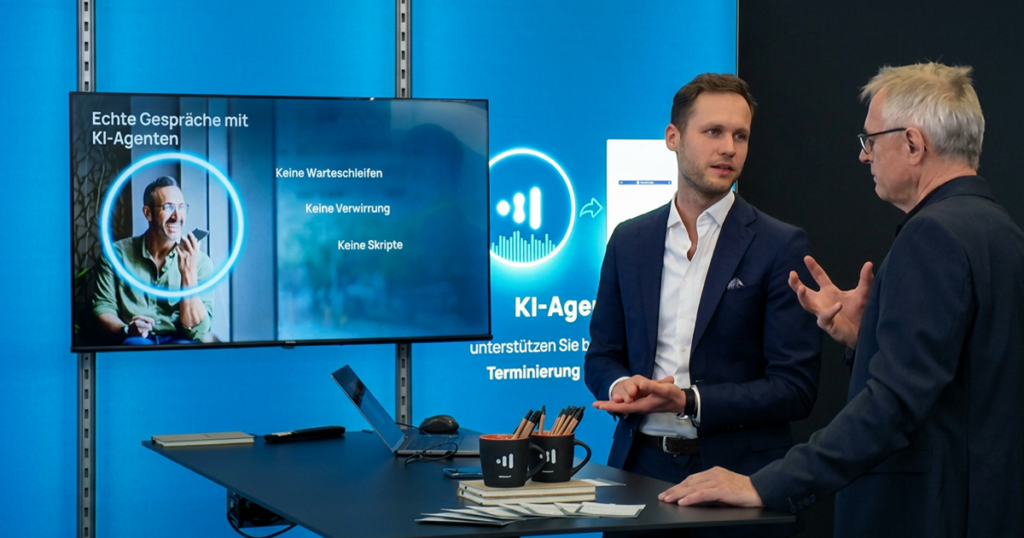
Voice AI agents can support service intake, appointment confirmation, availability checks, and customer updates. An AI LLM action can help prepare ticket information, summarize service context, clean up unclear notes, translate inputs, or support workflow decisions before the next step begins.
For telecom service teams, this matters because many delays do not come from one major failure. They come from small gaps: incomplete customer information, unclear ticket notes, repeated calls, manual checks, or handovers that need extra clarification.
AI can help reduce those gaps when it is connected to the service process. In a Zero-Touch field service setup, AI is not replacing the workflow. It adds another layer of support to help information move faster and more consistently from request intake to scheduling, technician preparation, customer communication, and follow-up.
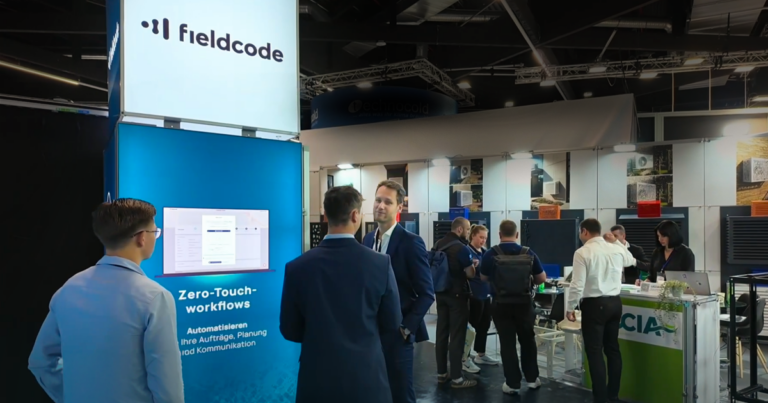
Check out a short video from ANGA COM 2026, capturing the atmosphere around the Fieldcode booth and the energy of the event.
Conclusion
ANGA COM 2026 showed how quickly telecom service expectations are changing. Fiber rollout, FTTH adoption, open access, in-home broadband, AI, and partner-based delivery all point to the same operational challenge: field service teams need to manage more complexity without adding more manual coordination.
For telecom providers, better field service execution is not about adding another workaround or another layer of complexity. It is about making the everyday work easier to control, easier to repeat, and easier to scale.
Fieldcode supports that shift with scheduling, mobile workflows, customer communication, and AI-supported service actions built into the same operational flow. If your team is ready to see what that looks like in practice, book a personalized demo.
Because a broadband experience does not start when the connection goes live. It starts when the customer books the visit.
Knowledge tip
Telecom teams should treat scheduling as part of service quality, not only workforce planning. Field service management software connects technician availability, routes, customer appointments, SLA priorities, job data, mobile reporting, and AI-supported actions in one process. This gives service teams more control when installation volumes grow, appointment windows shift, partner handovers increase, or urgent repairs interrupt the plan.
FAQ
Why do telecom teams move away from Outlook-based scheduling?
Outlook can show when someone is free, but telecom field service needs more than an open calendar slot. Teams also need to consider technician skills, routes, SLAs, parts, customer time windows, partner handovers, and job readiness. FSM software brings those details into the scheduling process, so teams can plan work around the real conditions of the day instead of managing every change manually.
How can AI help telecom field service teams?
AI can support call intake, appointment handling, ticket preparation, service updates, and workflow checks. The real value comes when FSM software connects voice AI agents, AI-supported workflow actions, scheduling, dispatching, and mobile field work in one process. That gives telecom teams more control without adding another disconnected tool.